
Why Desert Locations Are So Popular in War Films
War films often rely heavily on the environment to tell their story. The landscape surrounding a battlefield can shape the mood of a scene, influence the tactical decisions of characters, and visually communicate the harsh conditions soldiers face during deployment.
One type of landscape that has become strongly associated with modern war films is the desert environment. From large Hollywood productions to independent military dramas, desert locations frequently serve as the backdrop for stories about modern conflicts.
But why are desert locations so commonly used in war movies? The answer lies in a combination of historical context, visual storytelling, practical filmmaking advantages, and logistical flexibility.
Modern Conflicts Often Take Place in Desert Regions
One of the most obvious reasons desert locations appear so often in war films is that many real-world conflicts over the past several decades have taken place in arid regions.
Films depicting modern military operations frequently reference locations such as:
Afghanistan
Iraq
Syria
parts of North Africa
remote areas of the Middle East
These regions share common geographic features, including:
dry desert terrain
rocky mountains and hills
dusty roads
sparse vegetation
Because these landscapes are strongly associated with modern warfare, filmmakers often use desert environments to recreate the visual atmosphere of contemporary military conflicts.
Desert Landscapes Create Powerful Visual Storytelling
Beyond realism, desert landscapes also provide a strong visual language for filmmakers.
Desert environments offer several cinematic advantages:
wide open terrain
dramatic horizons
natural contrast between sky and ground
minimal visual distractions
These elements allow cinematographers to capture powerful imagery that emphasizes isolation, scale, and tension.
A small group of soldiers moving through a vast desert landscape immediately communicates vulnerability and exposure, which can enhance the emotional impact of a scene.
Large Open Spaces Are Ideal for Filming Action Scenes
War films often include complex action sequences involving:
vehicle convoys
helicopter movements
large groups of actors
explosions and combat choreography
Desert environments provide the open space needed to safely stage these scenes.
Compared with urban environments, deserts allow filmmakers to:
place cameras at long distances
move vehicles freely
coordinate large-scale action scenes
film drone or aerial shots more easily
This flexibility is one of the reasons why many productions actively search for desert film locations when planning war movies.
Desert Locations Can Represent Many Regions
Another advantage of desert environments is their versatility.
Many desert landscapes look similar enough that they can represent different regions around the world.
For example, desert areas in the United States can be used to portray locations in:
Afghanistan
Iraq
Syria
North Africa
Central Asia
This allows filmmakers to create convincing international environments without leaving the country.
The American Southwest, particularly states such as New Mexico, Arizona, and Nevada, has become a popular stand-in for Middle Eastern locations in film and television.
Filming in the United States Reduces Production Costs
Traveling overseas with a film production can be extremely expensive.
Productions filming internationally must often manage:
complex permits
international transportation of equipment
security considerations
travel logistics for large crews
By filming in desert regions within the United States, producers can recreate similar environments while avoiding many of these complications.
This is one reason why desert film locations in New Mexico and the Southwest are increasingly popular for war films.
New Mexico: One of the Best Desert Filming Locations
Among desert filming regions in the United States, New Mexico has become one of the most attractive destinations for war film productions.
The state offers several key advantages:
large desert landscapes
dramatic mountain backdrops
reliable weather and strong natural light
competitive film tax incentives
New Mexico’s film incentive program can provide productions with roughly 35–38% in refundable tax credits on qualified in-state spending.
For independent productions and mid-budget films, this financial advantage can make a significant difference.
A Purpose-Built Military Film Set in the New Mexico Desert
Southern New Mexico is particularly valuable for military-themed productions because its landscapes closely resemble regions where modern conflicts often take place.
One example of a filming location designed specifically for these types of projects is the Wesely Bros Military Film Set in Deming, New Mexico.
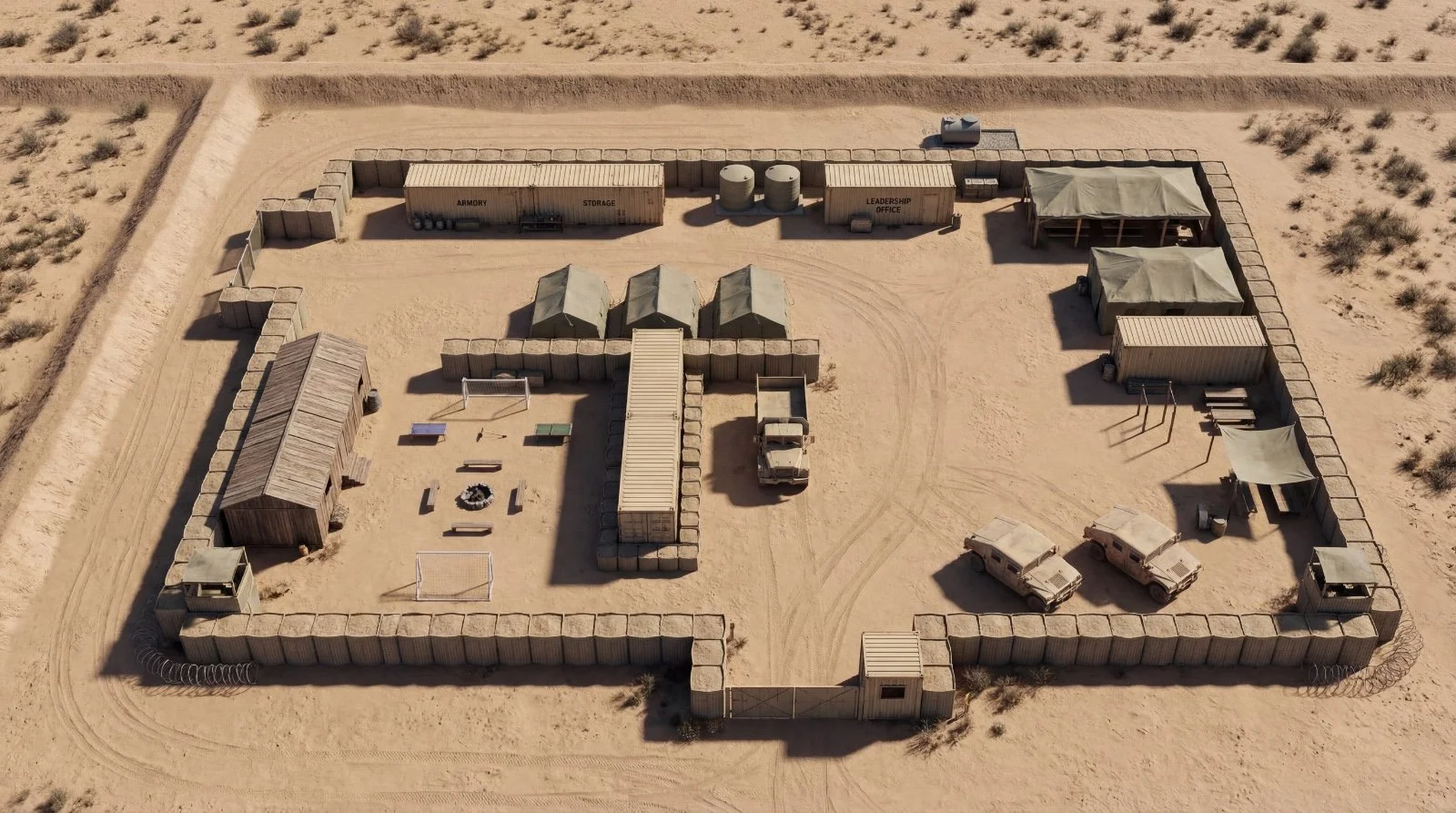
FOB Military Base set in Deming NM, starting at $1,400
The property sits on approximately five acres of desert terrain, while the central base itself covers around 1,350 square meters.
The set is designed as a realistic Forward Operating Base (FOB) and includes defensive structures such as:
HESCO barriers
barbed wire defenses
defensive perimeter walls
two secured entrance gates
two watchtowers
A camp of this size would realistically house 70–100 soldiers, making it suitable for a wide range of war film scenes.
Because the base already exists, productions can film in a realistic military environment without building large sets from scratch.
Interior Military Environments for Film Scenes
War films often include scenes that take place inside the base itself.
The Deming location includes four shipping containers converted into interior film environments, allowing productions to shoot multiple types of scenes in one location.
These environments include:
Barracks Container
bunk beds
two working bathrooms
functional shower
captain’s quarters
Armory Container
military uniforms
helmets
tactical vests
prop weapons
Command Office Container
mission briefings
strategy discussions
Medical Container
field hospital environment
treatment bed for battlefield scenes
These built-in environments allow productions to film multiple scenes efficiently.
Military Vehicles for Realistic War Scenes
The location also provides several military vehicles for productions.
These include:
one fully functional Humvee
one 6×6 military cargo truck
one non-operational Humvee prop vehicle
These vehicles can be used for scenes involving patrol missions, convoy sequences, or base operations.
Additional Desert Terrain for Exterior Scenes
Beyond the base itself, the surrounding property offers additional filming opportunities.
The location includes:
roughly five acres of desert landscape
a 150-meter dirt access road
These areas are well suited for filming:
convoy scenes
patrol sequences
establishing shots of the base
combat scenes outside the perimeter
The open terrain and mountain backdrops create a cinematic environment that works well for modern war storytelling.
Film-Friendly Communities
Another advantage of filming in southern New Mexico is the support offered by smaller communities.
Cities such as Deming, New Mexico have developed a reputation for being film-friendly and supportive of productions.
Compared with major metropolitan areas, smaller cities often provide:
simpler permitting processes
fewer logistical restrictions
easier access to locations
Productions may also find access to unique locations such as:
aircraft hangars
regional airports
industrial facilities
rural highways
These types of locations are often significantly more affordable than similar locations in major film markets.
Conclusion
Desert environments have become an essential visual element in many war films. Their connection to modern conflicts, dramatic landscapes, and practical advantages for filming make them ideal settings for military storytelling.
The wide open terrain allows filmmakers to stage large action scenes while creating visually powerful imagery that reinforces the intensity and isolation of war.
Regions such as New Mexico’s desert landscapes continue to attract filmmakers thanks to their cinematic visuals, competitive incentives, and flexible filming environments.
Locations like the Wesely Bros Military Film Set in Deming, New Mexico demonstrate how purpose-built environments within these landscapes can help filmmakers create realistic military scenes while keeping production efficient.
For productions searching for a desert film location, a war movie filming environment, or a military base film set in the United States, the American Southwest remains one of the most compelling options available.