How to Shoot Combat Scenes Safely
Filming combat scenes is one of the most complex and potentially dangerous aspects of producing a war film. Explosions, weapons, vehicles, and large groups of actors all create situations where safety must be carefully managed.
For filmmakers working on war movies—especially independent productions—understanding how to stage combat scenes safely is essential. Proper planning, professional supervision, and controlled environments can make the difference between a successful shoot and a dangerous situation.
Fortunately, many modern productions are now using purpose-built military film sets and professional safety procedures to create realistic combat scenes without unnecessary risk.
Why Safety Matters in War Film Production
Combat scenes often involve elements such as:
· prop firearms
· simulated explosions
· moving vehicles
· stunt performers
· large groups of actors
Without strict safety protocols, these elements can quickly become dangerous.
Professional productions treat combat scenes much like stunt work. Every movement, camera position, and effect must be carefully planned and rehearsed.
This is why many productions rely on experienced stunt coordinators and armorers to manage combat sequences.
Working with a Professional Armorer
An armorer is responsible for managing all weapons used during filming.
Their responsibilities typically include:
· preparing and inspecting prop weapons
· ensuring actors use weapons correctly
· controlling when weapons are loaded with blanks
· coordinating weapon safety procedures
Even when productions use non-functional prop weapons, having a professional armorer on set is essential.
Proper weapon handling dramatically reduces the risk of accidents during filming.
Using Stunt Coordinators for Combat Choreography
Combat scenes often require actors to move through complex environments while reacting to simulated gunfire or explosions.
Stunt coordinators help design these movements in a way that is both visually convincing and safe.
Their work typically includes:
· choreographing soldier movements
· planning actor positions during firefights
· coordinating explosions and effects
· rehearsing scenes before filming
This level of preparation ensures that actors and crew members always know where they should be during each moment of the scene.
Controlled Environments Improve Safety
One of the safest ways to film combat scenes is by using controlled film sets rather than uncontrolled real-world locations.
Purpose-built film sets allow productions to control:
· actor movement paths
· camera positions
· safe distances for explosions
· vehicle movement routes
For example, filming combat scenes inside a dedicated military film set allows productions to stage firefights and action sequences without dealing with unpredictable environments.
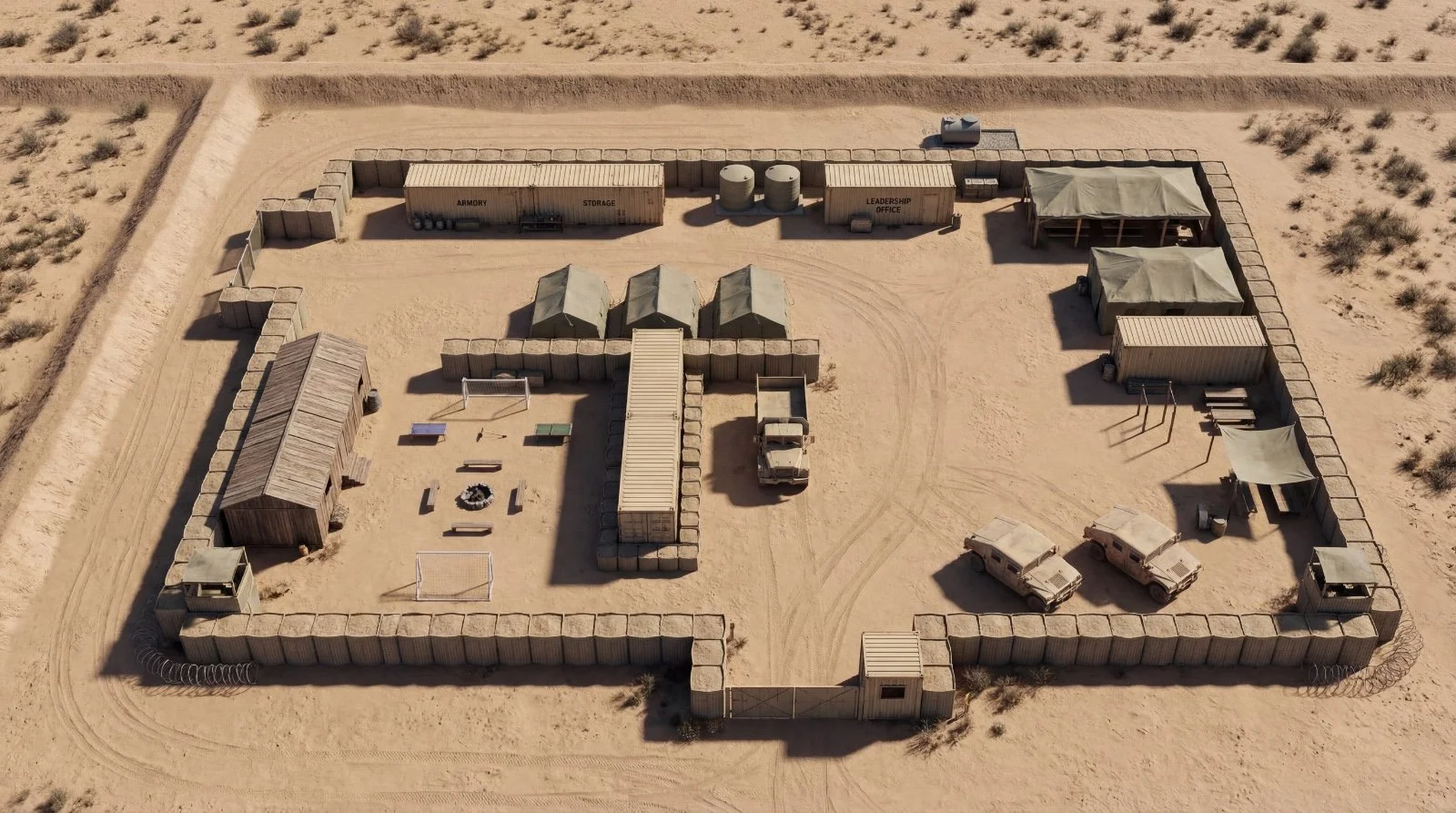
The Wesely Bros Military Film Set in Deming, New Mexico, for example, was designed specifically to support these kinds of productions. The controlled layout of the base—including HESCO barriers, defensive walls, and interior sets—allows filmmakers to safely choreograph action scenes while maintaining visual realism.
Planning Explosions and Effects
Many combat scenes involve simulated explosions such as dust hits, debris blasts, or pyrotechnic effects.
These effects should always be handled by licensed special effects technicians.
Professional effects teams will typically:
· mark safe zones for actors
· coordinate timing with stunt performers
· rehearse the scene before filming
When planned correctly, these effects can create dramatic visuals without putting anyone at risk.
Vehicles and Convoy Scenes
Military films often include vehicle sequences such as patrols or convoys.
Vehicle scenes should be carefully planned and rehearsed.
Key safety steps include:
· marking vehicle paths clearly
· limiting speeds during filming
· coordinating camera vehicles separately
Large open filming areas—such as desert landscapes—can make these scenes much safer because they allow productions to control traffic and filming space.
The desert terrain around Deming, New Mexico, for example, provides wide open areas where convoy scenes can be staged safely and efficiently.
Why Dedicated Military Sets Help
Purpose-built military film sets offer significant advantages for productions filming combat scenes.
These sets typically include:
· controlled base layouts
· secure filming environments
· realistic military infrastructure
The Wesely Bros Military Film Set, for example, includes a realistic Forward Operating Base (FOB) layout covering roughly 1,350 square meters, surrounded by HESCO barriers, barbed wire, and watchtowers.
Because the set was designed specifically for filming, productions can stage combat scenes while maintaining full control over the environment.
Conclusion
Combat scenes are one of the most exciting elements of war films, but they must always be approached with careful planning and professional supervision.
Using trained stunt coordinators, experienced armorers, and controlled filming environments allows productions to create intense battle scenes while maintaining a safe set.
Locations such as the Wesely Bros Military Film Set in Deming, New Mexico demonstrate how purpose-built environments can help filmmakers achieve realistic combat sequences while maintaining professional safety standards.